
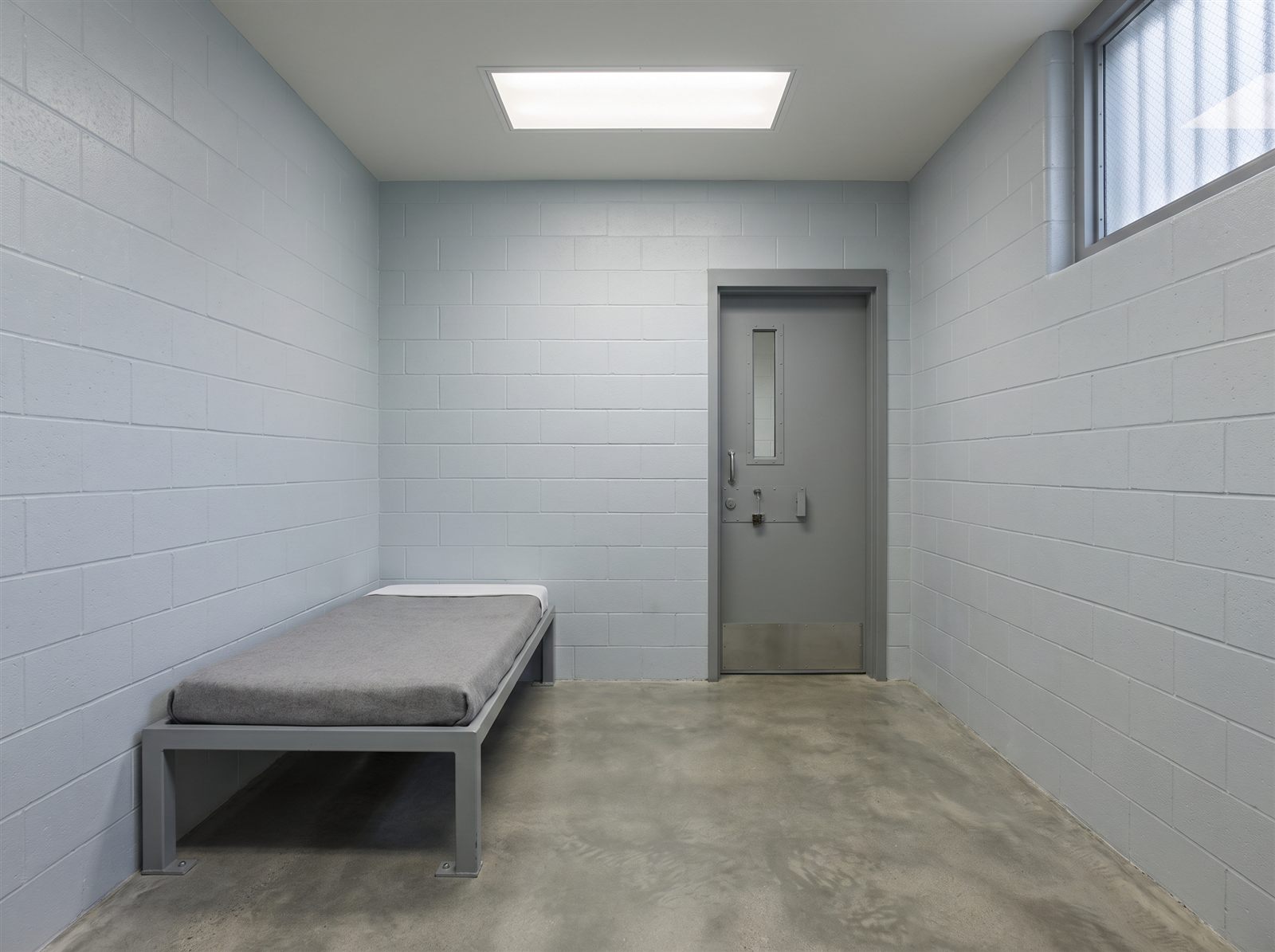
Nothing can be worn and nothing can be within reach. The XK300 is mounted high in the ceiling, and measures heart rate and respiration rate through bedding, with no camera and no microphone. It also monitors whether a person is present and how long they have been without motion. The data goes to the facility’s clinical staff, who decide what to do with it.
Everything on this page is either what the sensor measures or published science with the citation attached. Deployment accounts from our partners, and what has been recorded in their facilities, are shared directly with qualified agencies rather than published here.
Sheriffs already know this part. It is written here with sources attached so it can be checked.
KING 5’s analysis of over 300 claims and lawsuits against more than 40 Washington jails found that between 2020 and 2024, local governments and their insurers spent $53.2 million to resolve them, and a further $6.8 million on costs such as legal fees.
KING 5 investigation, 13 March 2025 · source
Jackson County, Indiana settled for $7.25 million over the death of Joshua McLemore, 29, who died in 2021 after 20 days in a cell. A single case, and the upper end of what one death can cost a county.
Settlement announced December 2023 · source
In fiscal year 2021 alone the Department of Justice failed to identify at least 990 prison and arrest-related deaths, and 70 per cent of the data it did collect was incomplete. Most of those deaths were already on public state websites.
US Senate Permanent Subcommittee on Investigations, “Uncounted Deaths in America’s Prisons & Jails”, September 2022 · source
US corrections partners cite roughly one million dollars as a typical settlement for a death in custody. That is their statement from their own market, not a published statistic, and it is written here as such.
Heart rate gets the attention. The clinical literature points somewhere else: breathing is the first thing to move when a person deteriorates, and it is the vital sign least likely to have been counted properly. Radar reads it directly from the movement of the chest wall.
Respiratory rate is the sentinel and arguably most important vital sign, because its normal values are breached before those of other vital signs in nearly all states of clinical decline. Changes in it are often the earliest warning of sepsis, shock and respiratory insufficiency.
Loughlin, Sebat and Kellett, Joint Commission Journal on Quality and Patient Safety, 2018 · expert commentary · source
Respiratory rate is often the first vital sign to deviate when a patient’s condition worsens. The review’s own conclusion is more careful: how well it predicts deterioration varies with the clinical setting and with how it is measured.
Aglen et al., Acta Anaesthesiologica Scandinavica, 2025, scoping review · source
Respiration rate variability and Heartbeat Clarity, explained: what the radar reads from the movement of the chest wall.
The XK300 reads the chest wall moving. It does not estimate breathing from a pulse signal or from anything else, and it does not need the person to be wearing or carrying anything for it to work.
Across 36,966 hospital stays, recorded respiratory rates were not normally distributed but clustered at 18 and 20. The authors conclude that the values recorded are frequently inaccurate. A round number gets written down rather than counted for a full minute. The vital sign that moves first is the one nobody is really measuring, and that is the gap a sensor closes: a rate taken from the movement of the chest, every night, whether or not anyone had time to count.
Badawy et al., “Is everyone really breathing 20 times a minute?”, BMJ Quality & Safety, 2017 · source
Most contactless vital-sign radar on the market runs at 60 GHz, where the wave is about five millimetres long. The XK300 runs at 6.5 to 8.5 GHz impulse ultra-wideband, where it is about forty. That one difference sets penetration, and penetration sets everything else in a cell: a blanket, a thick jacket, a pillow, a person who has rolled onto their side.
A short wave bounces off the first soft surface. A long wave carries through to the chest, which is where breathing has to be read from.
When somebody rolls over, a short-wave system loses the target and has to find it again. In the pattern on this page, the whole event takes about two minutes.
In a cell the sensor sits behind a fireproof, shatterproof housing mounted high in the ceiling. A short wave struggles to get through thick plastic. This one does.
Contactless radar for heart rate and breathing has been cleared by the FDA fourteen times. Only two of those summaries state how often the device produces a reading, and both are breathing-only devices cleared before 2021. For the rest, the filing is silent.
One cleared device’s summary says a clinician reviews heart rate and breathing retrospectively, and that motion and presence are what is available in real time. That is their document describing their own data path.
The same family of devices includes a function that tells staff when no heart rate has been obtained in the last eight hours. In a cell, eight hours is a shift.
Two other cleared devices are indicated only for adults at rest or asleep, in a non-motion condition, with the data used for retrospective analysis. That is the honest limit of what those clearances cover.
No company is named here and none of these are quoted out of context. Ask us and we will send you the 510(k) numbers so you can read the summaries yourself, ours included, along with the deployment material we share under confidentiality with agencies evaluating the system. No contactless radar device of any make, the XK300 among them, has been cleared as an alarm or for active patient monitoring.
Millimetre wave and impulse ultra-wideband, side by side.
Ask for the 510(k) number. FDA clearance numbers are public by design, so the claim is checkable in a minute by anyone, including you. “Cleared” without a number is not an answer.
XK300: K202464.
This page does not name other companies, and the comparisons above are about frequency and wavelength rather than any particular product.
Fireproof and shatterproof, mounted high in the ceiling. Nothing within reach and nothing to break.
Cleared to monitor presence within seven metres, and used at three to seven metres, which is roughly ten to twenty-three feet.
Fully edge computing, with on-premises servers where a facility requires that sensor data never leaves the building.
A power source and a gateway. Everything else is in the box.
HTTPS, MQTT, LoRaWAN, mIOTY. Running in facilities today.
NB-IoT, private 5G, Wi-Fi and LTE. Supported by the product, not yet proven by a deployment we can point you to.
“The Vital Sign Monitoring Sensor (Model XK300) is intended to measure heart rate and respiration rate in adult patients in a general care hospital environment including nursing homes. The Vital Sign Monitoring Sensor can be used for home healthcare for data collection to inform patient care but not to acutely treat a patient. XK300 monitors presence or absence of a patient in a detection area of within 7 meters. The XK300 also monitors the length of continuous patient motion or absence of patient motion.”
Device statements, clinical decisions. XK describes what the sensor measures and displays. The facility’s clinical programme decides what happens with that information: who reviews it, what is displayed, and how it sits alongside observation policy.
For the current regulatory status of the XK300 in correctional settings, ask our team.
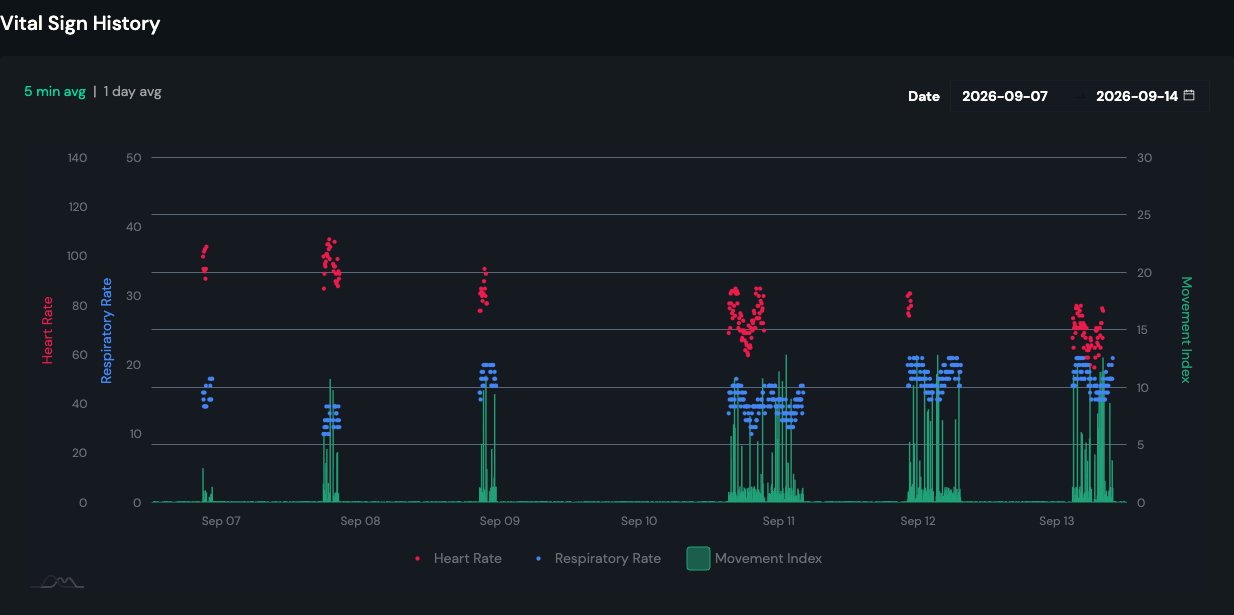
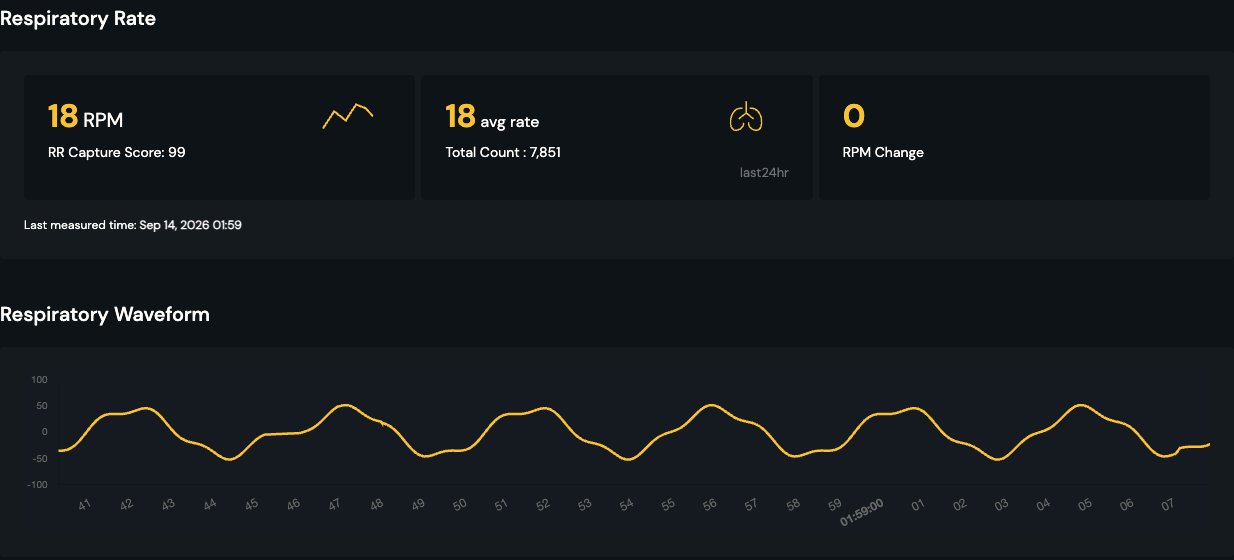
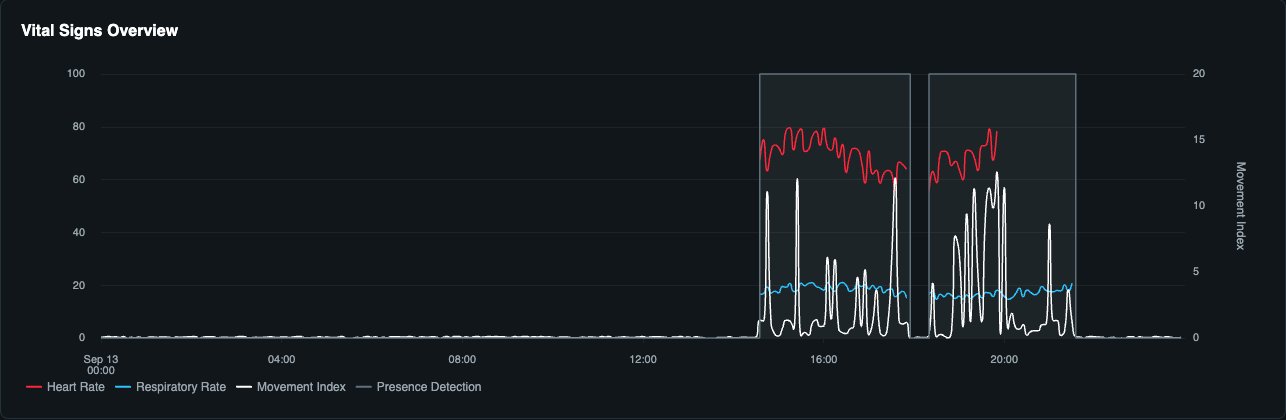
Screens from the Kardian dashboard, shown with synthetic demonstration data.
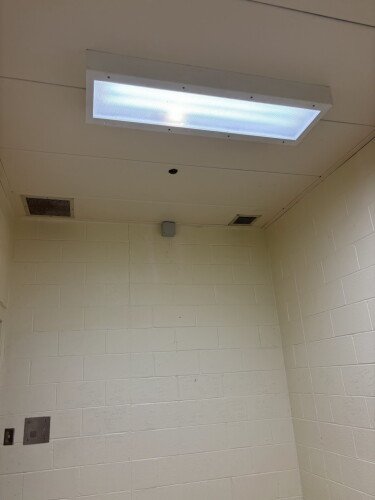
Mounted high, out of reach.
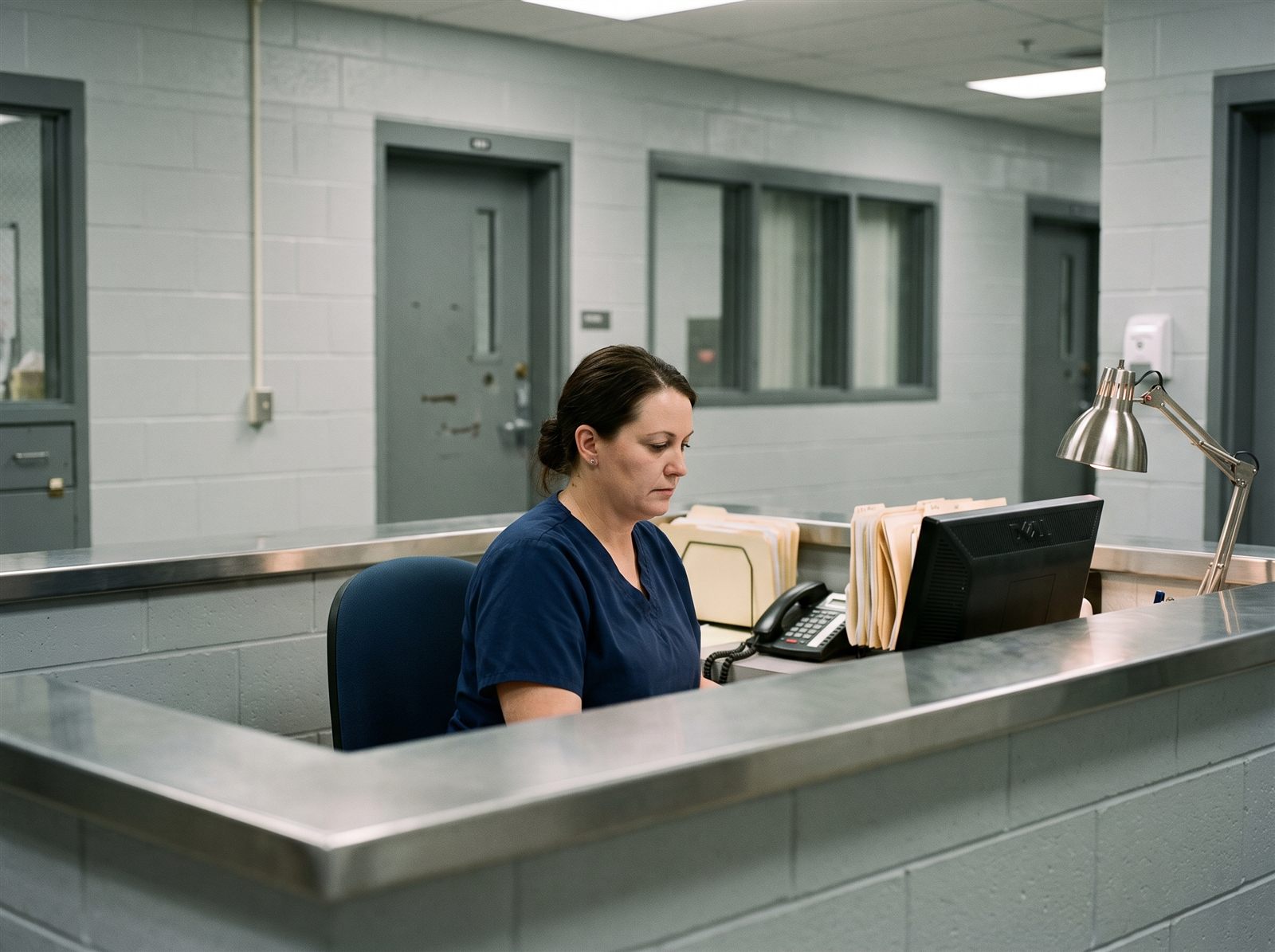
Available continuously to clinical staff, and a record of what was measured.
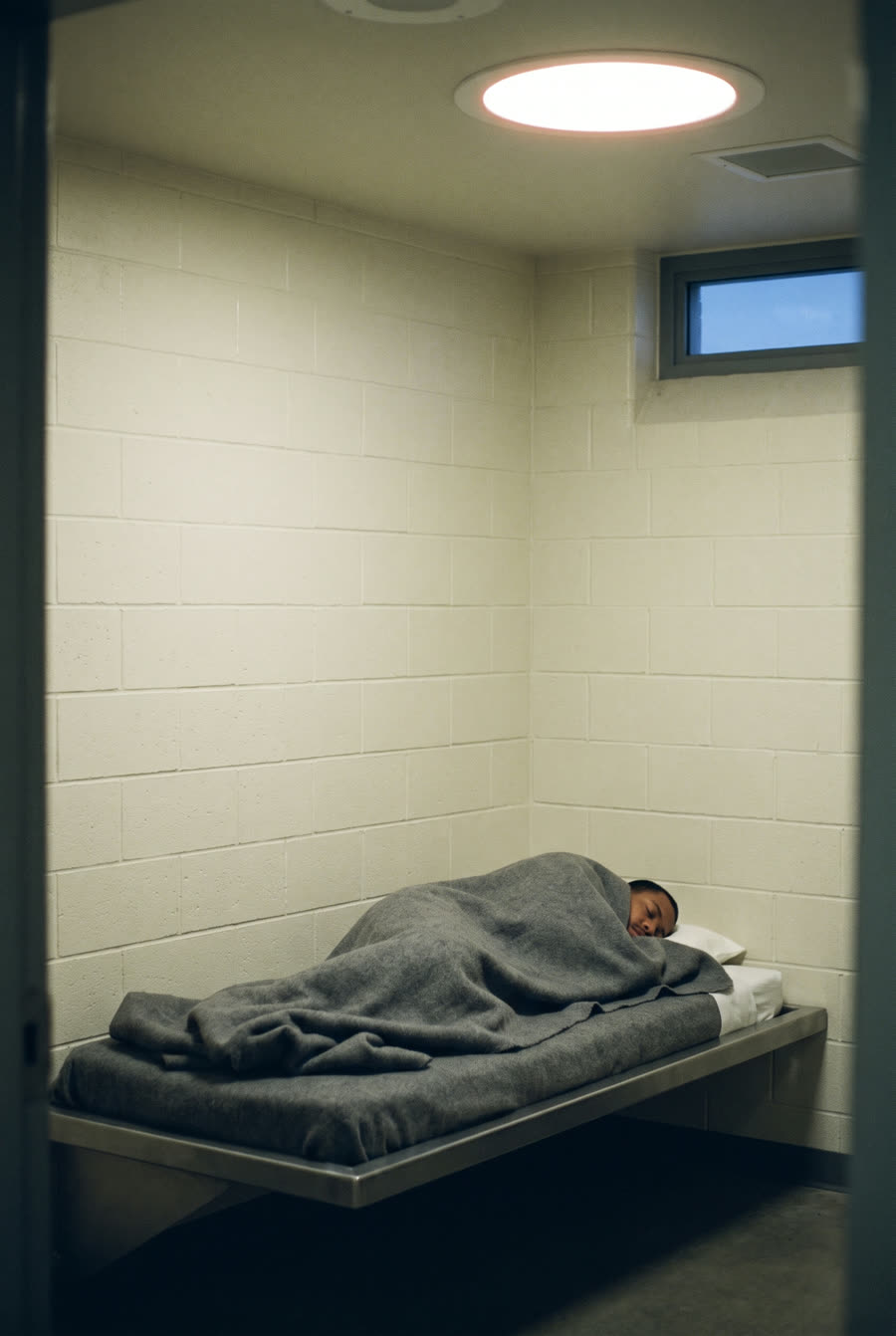
Measured through bedding, at night, without entering the cell.
The XK300 is FDA 510(k) cleared in the United States, K202464, as a Class II prescription device to measure heart rate and respiration rate in adult patients. Availability and regulatory status differ from country to country. Ask our team what applies where you are.
You appear to be outside the United States. The FDA clearance above applies in the United States only. In your country the XK300 may be available under a different approval, through a local partner, or not yet at all, and what we may say about it differs accordingly. Ask our team what applies where you are, and we will tell you plainly.
The XK300 is FDA 510(k) cleared, K202464, as a Class II prescription device to measure heart rate and respiration rate in adult patients. It is not an alarm, it does not detect overdose or any other clinical event, and it does not replace observation rounds or clinical checks.