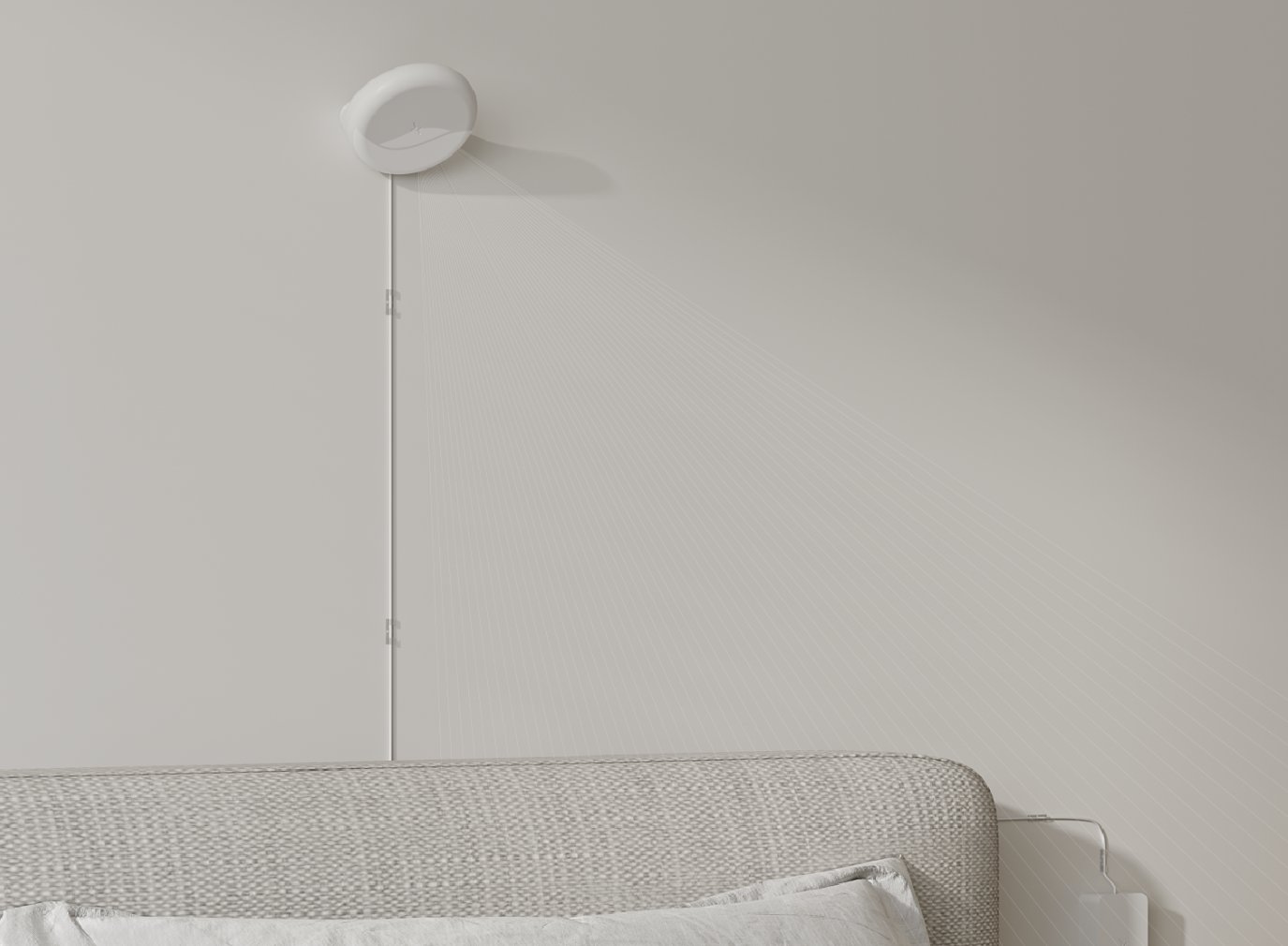
Monitoring at home fails in a particular way. It is not that the reading is wrong. It is that the reading stops, and nothing says it has. A sensor on the wall has no battery to go flat, nothing to put on and nothing to forget, so the record either exists or the system knows it does not.
Post-acute is where this works, for the same reason correctional and behavioural health work: failure is measured, published and paid for. The hospital already knows its readmission figure. What it does not have is any idea what happened in the patient’s bedroom between discharge and the return.
CMS applies the readmissions payment adjustment to every Medicare discharge in the year, not only to readmissions and not only to the six measured conditions. The reduction can reach 3 per cent of base operating payments.
CMS Hospital Readmissions Reduction Program; 42 CFR 412.154 · source
Raw unplanned readmissions after a heart failure admission fell from 23.6 per cent to 21.4 per cent between 2010 and 2016. Roughly one patient in five still comes back inside thirty days.
MedPAC, June 2018 Report to Congress · source
For a five-day acute episode at home, a chest patch that runs all day is the right answer, and we will say so. This sensor collects while the patient sleeps, over weeks and months. Different job.
One large registry study found 30-day risk-adjusted mortality after heart failure admission rose from 7.2 to 8.6 per cent as the penalties took effect, while readmissions fell.
Gupta et al., JAMA Cardiology, 2018 · source
MedPAC’s own mandated report reached a different answer: the mortality effect was no longer statistically significant once hospice patients were removed, risk-adjusted 30-day mortality fell from 13.6 to 9.4 per cent over 2010 to 2016, and at hospital level the correlation between changes in readmissions and changes in mortality was 0.066, which is close to none.
MedPAC, June 2018 Report to Congress · source
Taken together, the honest reading is not that reducing readmissions harms patients. It is that a hospital which reduces readmissions without knowing what is happening at home is working blind, and the argument about whether that costs lives is still live.
A cardiologist described her heart failure patients, many of them in their eighties. The hospital cannot prescribe a consumer smartwatch, because it is not a medical device, so it gets recommended and the family buys one. Take it off as little as possible. Charge it every couple of days. Thirty days later, five days of data.
Twenty-five days of nothing looked identical to twenty-five days of data until somebody went looking. A ceiling sensor with no battery and no user action has no equivalent failure mode: either readings arrive every night or the absence is visible immediately.
In a hypertension programme of 6,595 patients, people stayed enrolled an average of 295 days and transmitted data on about 70 per cent of them. In a Medicaid diabetes programme, fewer than half transmitted on 80 per cent of days.
Smith et al., Healthcare, 2024; Park et al., Journal of Medical Internet Research, 2023 · source
This sensor measures while the person is at rest, mostly at night. It is not watching all day, and a heart attack does not wait for bedtime. The question to ask is which you would rather have across a 30, 60 or 90 day window: all-day data that stops after the first week, or a reading every night for three months.
In a multicentre study of continuous wearable monitoring, an algorithm using heart rate, heart rate variability, activity, temperature and respiration identified patients heading for a heart failure admission with 76 to 88 per cent sensitivity, a median of 6.5 days before it happened.
Stehlik et al., LINK-HF, Circulation: Heart Failure, 2020 · source
Breathing carries a large part of that signal: in implanted-device data, respiratory rate ran one and a half to two breaths a minute above baseline in the week before a heart failure event.
Goetze et al., Journal of Interventional Cardiac Electrophysiology, 2015 · sensitive but with a low positive predictive value, so it is a prompt to look, not a prediction · source
This is not acute care. There is no clinician on site, or not often, and in assisted living there are staff but not nurses. The promise is simpler: the person is measured every night, the family can see it if the person agrees, and nobody has to remember anything.
Every competitor claims proactive and predictive monitoring, so that cannot be the argument. The argument is that there is nothing to wear, nothing to charge and no battery that can quietly die, which is the difference between a system that is still running in year three and one that was abandoned in month two.
In the one study that measured it, about 2 per cent of older adults in low-income independent living took up a passive monitoring system that was offered to them, and more than a fifth of those who did later stopped using it.
Berridge, The Gerontologist, 2016, as collected in Read et al., Canadian Journal on Aging, 2023 · data from around 2013 · source
They want to know their mother is looked after at night, and they do not want a camera in her home. Radar answers both, and the person being measured keeps their dignity and their privacy.
People retire away from cities, to the coast and the quiet places, while their children work in them. Parents in rural Connecticut with children in New York. Parents in the provinces with children in Seoul. The same few days of early information are worth more the further apart they live, because they are what makes it possible to arrange the car, take the train and get checked.
Rural Americans live a median of 10.5 miles from the nearest hospital, against 5.6 miles in the suburbs and 4.4 in cities.
Pew Research Center, 2018 data · source
When a rural hospital closes, residents travel about 20 miles further for inpatient care. In the counties studied, the median distance went from 3.4 miles in 2012 to 23.9 miles in 2018.
US Government Accountability Office, GAO-21-93 · source
154 rural hospitals have closed or converted since 2010. The people who most need care are the furthest from it.
UNC Sheps Center rural hospital closures tracker · source
XK is part of AscendRural, selected into the programme for its ability to provide health monitoring for rural America.
Most remote monitoring in rural homes fails on connectivity, and usually on the assumption that the household has working broadband and somebody to reconnect it.
One in five rural adults has a smartphone and no home broadband. Anything that depends on the household’s Wi-Fi fails for that household.
Pew Research Center, surveyed 2025 · source
About 2 MB a month at half-hourly packets, about 100 MB at continuous collection, on 4G or 3G. Nothing to configure in the house.
The sensor draws less than a phone charger and runs continuously from a standard socket.
Across a scoping review of remote monitoring for older adults at risk of complications, seven of the twelve studies that looked at hospitalisation reported significant reductions. The review did not appraise study quality, so read it as a direction, not an effect size.
Salma et al., BMC Geriatrics, 2025 · source
A 2026 scoping review of continuous remote patient monitoring reports earlier detection of deterioration, fewer readmissions and better patient satisfaction, alongside real barriers: alert fatigue, data overload and financial sustainability.
Raps et al., Worldviews on Evidence-Based Nursing, 2026 · source
A systematic review of in-home positioning technology put it bluntly: there is no evidence for the use of in-home localisation technologies for any clinical outcome. Most of the literature measures whether the technology works, not whether the patient does better.
Chan et al., JMIR Aging, 2024 · source
So this is what we claim and what we do not. We claim earlier information and a record that does not quietly stop. We do not claim improved survival, and we do not claim the sensor prevents anything. The XK300 measures heart rate and respiration rate and monitors presence and movement. It is FDA 510(k) cleared, K202464, for adults, and it does not diagnose any condition.
People kept asking to buy the sensor directly. A typical case: someone in their forties with a heart condition, who wants it, and whose doctor has never heard of us. We are not a household name in a clinic, and a patient saying “I found this online, please prescribe it” puts a doctor in an impossible position.
Prescription-only was severely limiting, so there is now a consumer wellness version. It was not a downgrade in ambition. It was the only way through to the people who wanted it.