
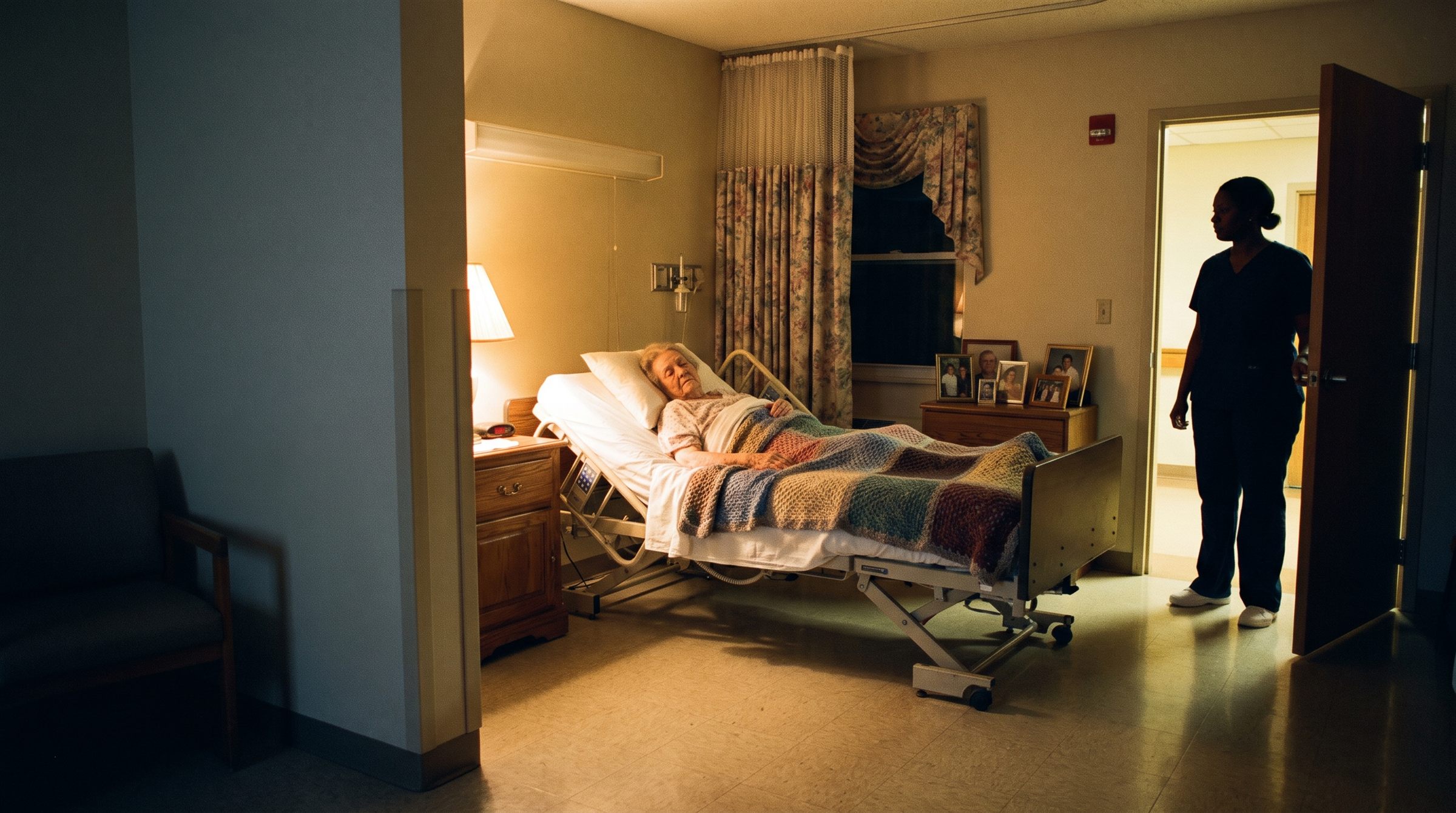
A hundred residents and a handful of staff is never one to one. The XK300 measures resting heart rate and breathing for every resident, all night, and shows the team whose readings changed against their own recent nights. Your protocols take it from there.
Licensed nurses around the clock. Most patients are short-stay rehab after a hospital discharge, paid by Medicare or a health plan.
With XK. The XK300 above every bed. The team sees whose nights changed and can head off avoidable transfers.

A secure, specialised setting for people living with dementia, mostly private pay.
With XK. Health, nights and room presence measured continuously, from a sensor installed out of sight and out of reach.
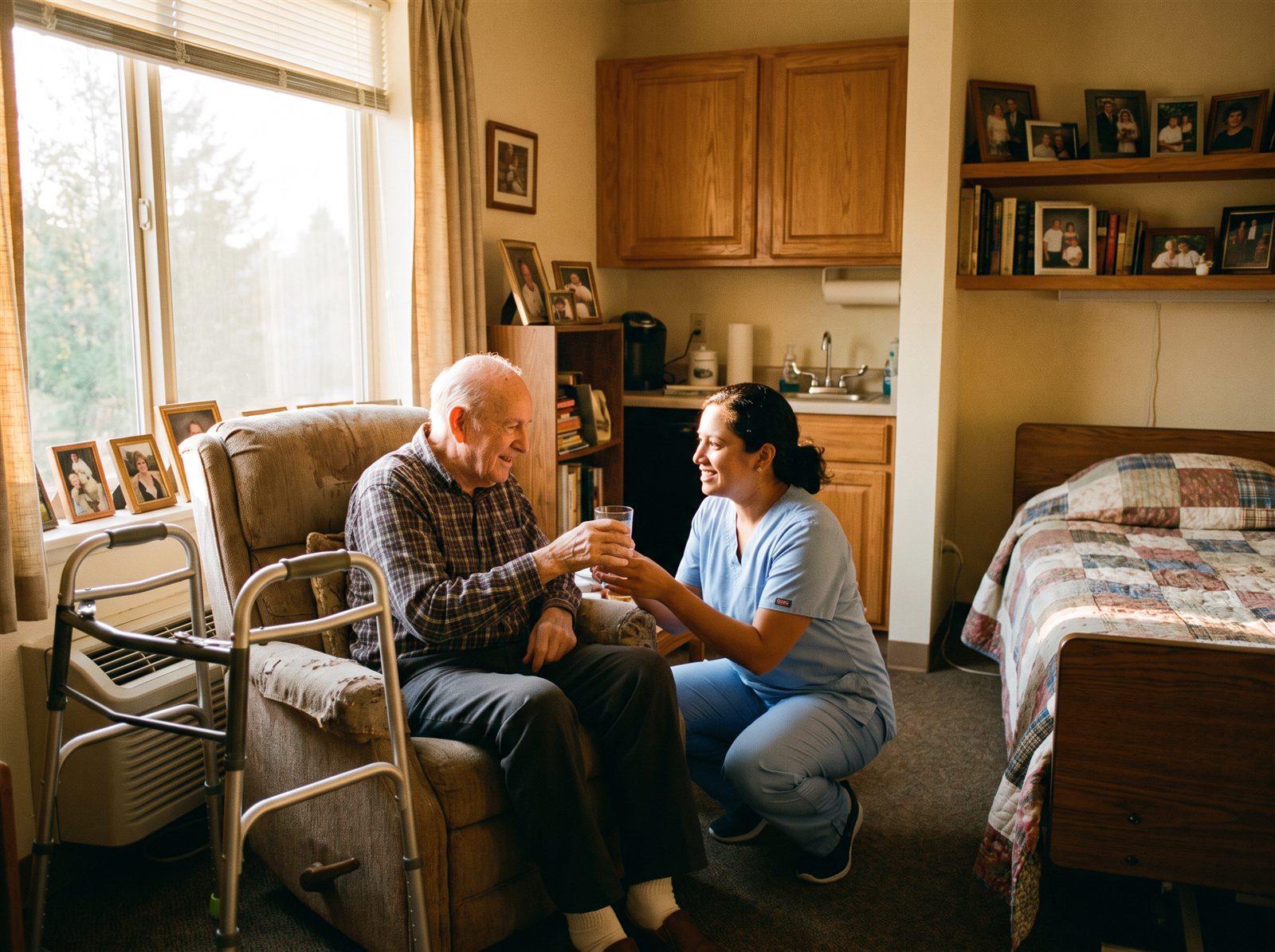
Help with daily living in a private apartment, mostly private pay. Fewer nurses, often none overnight.
With XK. A sensor per apartment, and care families can understand: nights looked after without cameras or wearables.

Residents live on their own in a community, with services on hand but no daily care.
With XK. A wellness amenity residents and families can see: nights on record, nothing to wear.
Each dot is a resident. On a typical day, three to five in a hundred show a change against their own baseline (XK field observations).
Federal rules ask for a registered nurse on site at least eight hours a day and “sufficient” staff around the clock; the 2024 minimum-staffing rule was repealed. US nursing homes average about 3.9 nursing hours per resident a day, 2.3 of them from nurse aides, and a statewide survey found about ten residents per aide on a day shift. It is never one to one, and nobody can check every resident closely every day.
The XK300 measures every resident every night. In the morning the team sees a short list: the residents whose resting heart rate or breathing moved against their own recent nights, in plain words. That is who to see first.
“I’m just tired today.”
Compared with her last seven nights: breathing higher all night, three nights running; heart rate similar. There is a reason she is tired, and now the team knows to look.
Night shifts run with the fewest people and are the hardest to fill. The XK300 measures every resident every few seconds all night, so the night nurse knows whose readings changed while the building sleeps, and the morning team inherits a full record instead of a gap. Rounds continue as the care plan sets them.
An extra blood pressure, temperature and oxygen saturation check.
Urinalysis and urine culture, when the physician orders them.
Your facility’s sepsis screen, started earlier.
A respiratory assessment for pneumonia or fluid.
Hydration, meals and medication review.
A call with the numbers in hand, not a hunch.
Of notifications led to a clinical decision, in XK field observations in US skilled nursing.
Residents in a hundred with a change on a typical day, in XK field observations.
Of hospital transfers were preceded by a baseline-change notice. 201 admissions, Validation Institute, 2024.
Average shift in the readings before a UTI diagnosis was recorded, looking back across 108 events.
Staffing: 42 CFR 483.35; CMS repeal of the minimum staffing standards, Federal Register, 3 December 2025; KFF analysis of CMS staffing data, July 2025 (3.85 total and 2.3 aide hours per resident day); Nelson et al., Innovation in Aging, 2024 (Ohio, 10.4 residents per direct-care aide on day shifts). Field observations are XK’s own deployment data, not an independent study. Validation Institute and UTI figures are retrospective findings. The XK300 provides configurable notifications that measured data has changed relative to a resident’s own baseline, for review by clinical staff. It does not diagnose any condition, including urinary tract infection or sepsis.
An illustrative sequence, not a case report. In the retrospective record, readings shifted on average 4.3 days before a UTI diagnosis was recorded (108 events). XK does not diagnose urinary tract infection; the physician does. The UTI study
XK-AI finds your facility in CMS Care Compare and fills in what is published about it: hospital transfers, rehospitalisations, your readmission withhold and your star rating, each beside the national average. You choose one thing: how many avoidable transfers your team could head off.
Modelled for skilled nursing facilities caring for post-acute, short-stay patients. Memory care, assisted living and independent living are a different case, covered below.

No facility yet? The numbers below are for a 100-bed post-acute facility.
Defaults: occupancy 79% (KFF, July 2025); 90% of resident days short-stay, as modelled for a post-acute skilled nursing facility (for comparison, traditional Medicare pays for 8% of days in the median US nursing home, where long-stay residents dominate; MedPAC, 2026) and 29 covered days per Medicare admission (MedPAC, 2025); Medicare $577 per covered day (CMS Program Statistics, 2023); Medicaid $198 per day (HHS ASPE, 2024, on 2019 data); 1.90 long-stay hospitalisations per 1,000 resident days and 23.75% of short-stay residents rehospitalised (CMS Care Compare national averages, 2025); 45% of nursing-facility resident hospitalisations potentially avoidable (CMS Initiative to Reduce Avoidable Hospitalizations, 2005 data; expert chart review has put it as high as 67%); 6.4 days per hospital stay for patients admitted from nursing homes (AHRQ HCUP Statistical Brief 141); $11,255 Medicare spending per nursing home resident hospital stay (HHS Office of Inspector General, 2013, fiscal 2011 data); the 2% withhold is the Skilled Nursing Facility Value-Based Purchasing Program’s (CMS). In fiscal 2026 the median facility got back about a third of it (calculated from the CMS facility-level dataset). Nights kept are the hospital nights residents would have spent away: Medicare pays no skilled nursing day while a patient is in hospital (a return within three days continues the stay; a later return starts a new one), and long-stay nights are valued at the Medicaid rate. Patients who would not have come back are not counted, so the facility figure is conservative. Short-stay nights are valued at the traditional Medicare rate; Medicare Advantage and other plans pay their own rates, so change the payment per day if yours differ. Long-stay nights are a gross figure: where a hospital stay would have started a new Medicare stay, the facility may earn less by avoiding it (MedPAC, June 2017). Costs avoided accrue to the payer or risk-bearing organisation, not automatically to the facility. The CMS avoidable-hospitalisation initiative lowered the probability of a potentially avoidable hospitalisation by 1.4 to 7.2 percentage points (RTI, Health Affairs, 2017), a useful check on the share you set.
In memory care, the team needs to know how each resident is, day and night: their health, their nights and changes in their behaviour. The XK300 measures all of it continuously, with nothing to wear. And because residents may not understand what a device is for, or may not want to be “monitored”, it is installed where nobody notices it.
Out of reach, and it looks like a Wi-Fi router. Nothing for a resident to pick up, move or break.
The radar passes through canvas, wood and fabric, so the sensor can sit hidden behind a picture frame, angled at the bed by the installer.
The XK300 can connect over a standard network cable (RJ45, CAT5) run inside the drywall: low-voltage wiring that meets fire codes in states where other in-wall cabling does not. Your installer confirms local rules.
Families choosing memory care want to know their mother or father is looked after through the night. A community that measures every resident’s health and nights, with nothing on the body and nothing in view, is reassurance they can understand. With agreement from the resident or their representative, family members can see those nights from home.
A hidden or ceiling install is a custom job and is quoted per room. Room vacancy registers after about 40 seconds, so a pause in breathing is not read as an empty room. The XK300 measures heart rate and breathing rate and monitors presence and movement. It does not diagnose any condition and is not an alarm system for acute life-threatening events.
Most assisted living and memory care, and all independent living, is paid for privately. So the case is not hospital billing. It is what a family sees when they compare communities: a building that measures every resident’s nights, with nothing to wear and no camera in the room.
Families touring communities see care they can understand: every resident’s nights measured, and changes the team can act on.
No wristband to charge and no device on the body: nothing for a resident to forget, take off or refuse.
With the resident’s agreement, a family member can see their nights from home, in plain words.
Overnight, the team knows who was out of bed and whose readings changed against their own recent nights.
The XK300 measures heart rate and breathing rate and monitors presence and movement. It does not diagnose any condition and is not an alarm system for acute life-threatening events.
The sensors, the dashboard and the notifications go straight to your nursing team, who decide who to see first and what to do. You keep the programme and the results in-house.
Sign up with the remote patient monitoring company of your choice, or ask us to recommend one. Nothing changes for your nurses: the same notifications still come straight to your team.
People monitored in care settings since 2021, across seven countries.
Urinary tract infection. Readings had shifted this long before the diagnosis was recorded, on average, across 108 events.
End of life. The same look back across 390 journeys.
Of hospital transfers were preceded by a baseline-change notice. 201 admissions, reviewed by the Validation Institute in 2024.
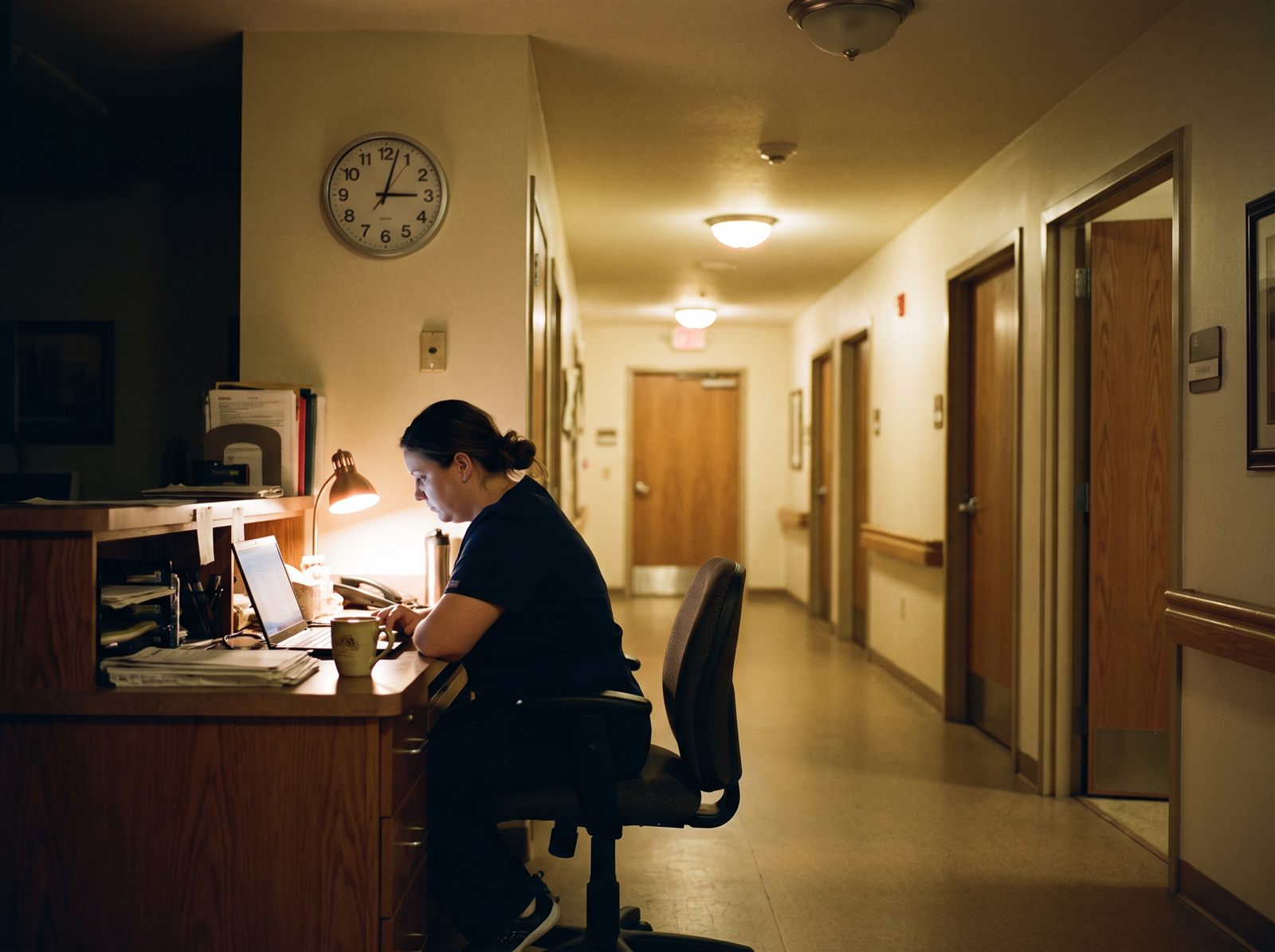
Night shift. Every occupied bed is measured every few seconds; rounds continue as the care plan sets them.

Handover. The review list shows whose nights changed, compared with their own, in plain words.
Heart rate, breathing rate and the breathing waveform, measured at rest, when a resident’s numbers mean the most.
Bed exits and time away, per night. In the UTI record, night-time bed exits were 38.1% higher before the diagnosis was recorded.
A configurable notification that measured data has changed relative to that resident’s own baseline, for review by the facility’s clinical staff.
The dashboard, email, or your EHR and nurse-call through the public API and webhooks.
206 residents, read back: breathing variability rose first, then night-time trips out of bed, then breathing rate, then heart rate. The study also walks through the arithmetic of a missed infection for a 100-bed facility.
In the last days, care turns from intervention to comfort. The XK300-H stands on a nightstand, nothing is fixed to the wall and nothing touches the resident. Across 390 journeys, readings changed on average 6.3 days before death.
The XK300 is FDA 510(k) cleared, K202464, as a Class II prescription device to measure heart rate and respiration rate in adult patients, in a general care hospital environment including nursing homes. It is not an alarm system for acute life-threatening events and does not diagnose any condition. XK does not predict or diagnose health events.