
Every XK300 carries the same impulse radar, computes on the device, and sends numbers rather than a signal. What differs is how it sits in the room and how it connects.
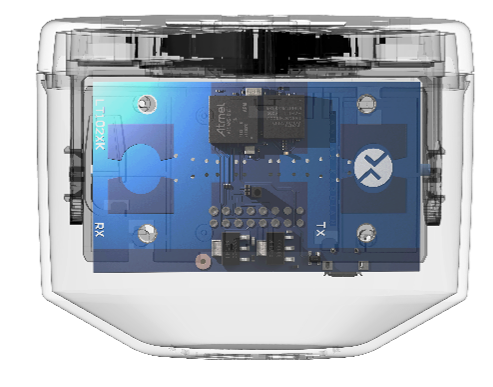
Mounted above the head of the bed or on the ceiling, powered and networked by the facility, reading every occupied bed all night. The unit used in hospitals, nursing homes and correctional facilities since 2021.
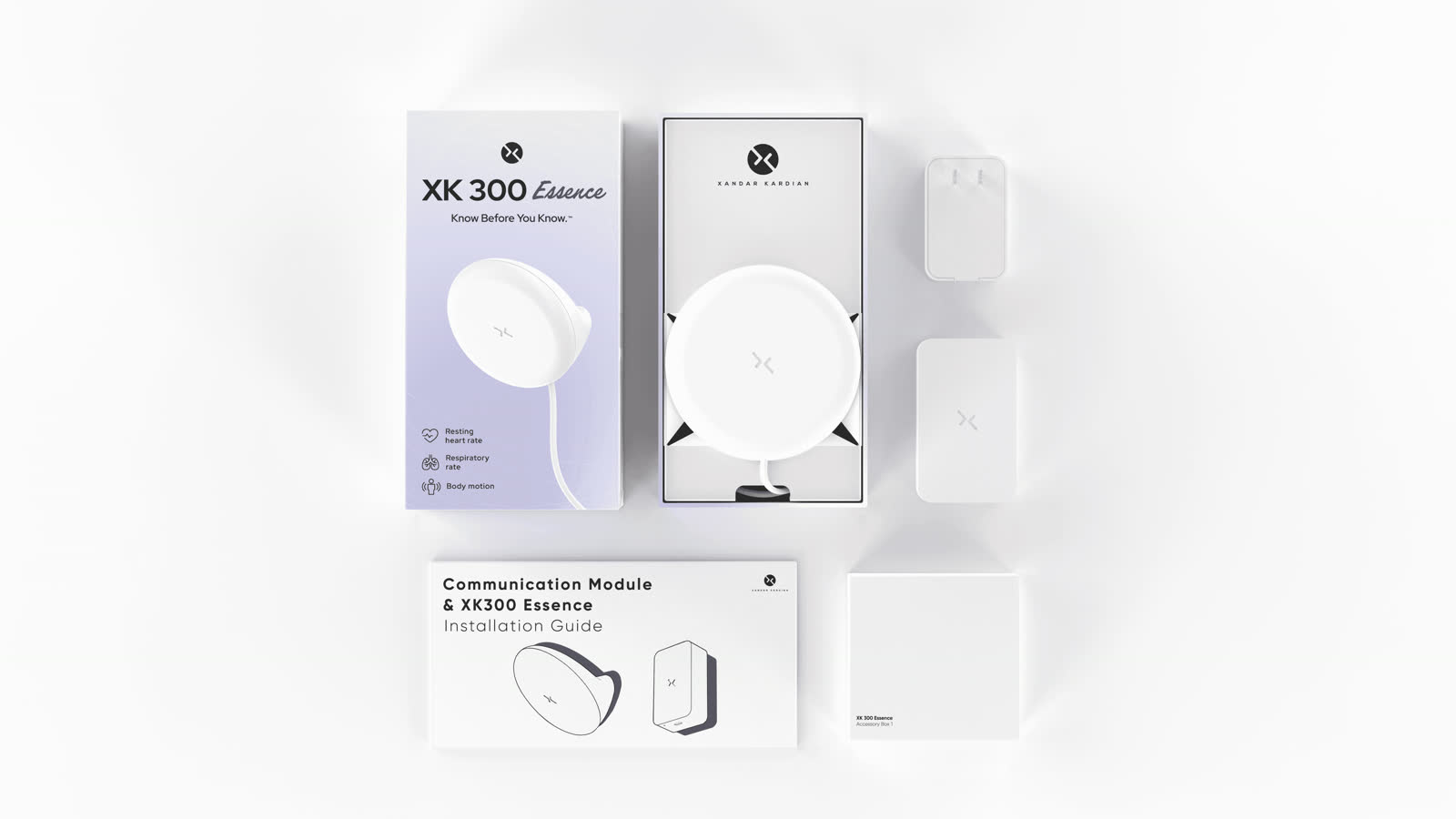
What arrives: the sensor, the communication module, the plug and the installation guide.
The same cleared sensor, packaged for a patient's bedroom: a communication module in the box, a setup card the patient can follow, and readings that reach your monitoring team every night without a wearable or a phone in the loop.
The patient-facing page, eligibility request and installation films live at www.kardian.com/essence.
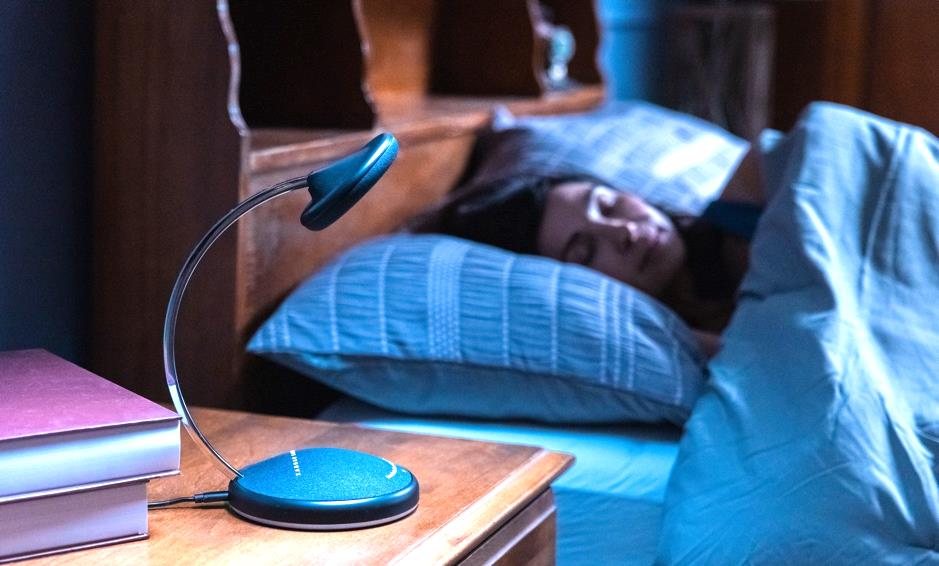
The same radar and measurements on a stand, for rooms where nothing can be fixed to the wall: hospice, respite, short stays and homes. Portable and flexible; move it where it is needed. It is the unit in the end-of-life case study.
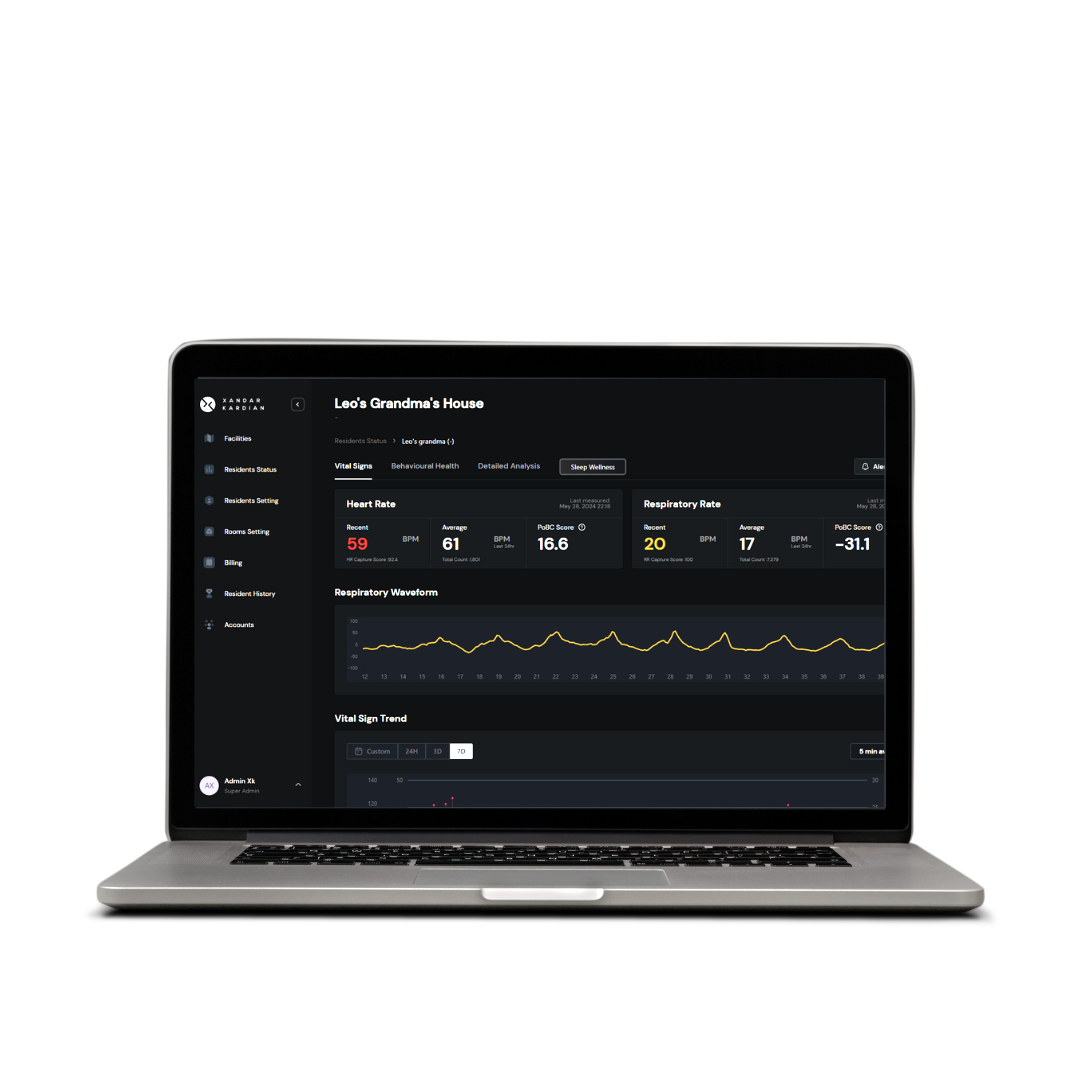
Every bed, every night: vitals, breathing waveform, bed presence, movement, and each person's baseline. Roles for administrators, facility staff and family.
Programme-level views and the Probability of Baseline Change, with thresholds you set and regional deployments per country.
Pull readings and notifications into your EHR, nurse-call or analytics platform. Documentation and keys through the customer portal.
Orders, sensor inventory and serials, invoices, agreements and support at xkportal.com.
Notifications describe a change against ranges you set or the person's own baseline, in neutral words. They are not an alarm system for acute life-threatening events. No camera, no microphone.
A separate general wellness product built on Xandar Kardian's radar technology, bought directly by consumers. Not a medical device, and not the cleared device. It lives on its own site.