
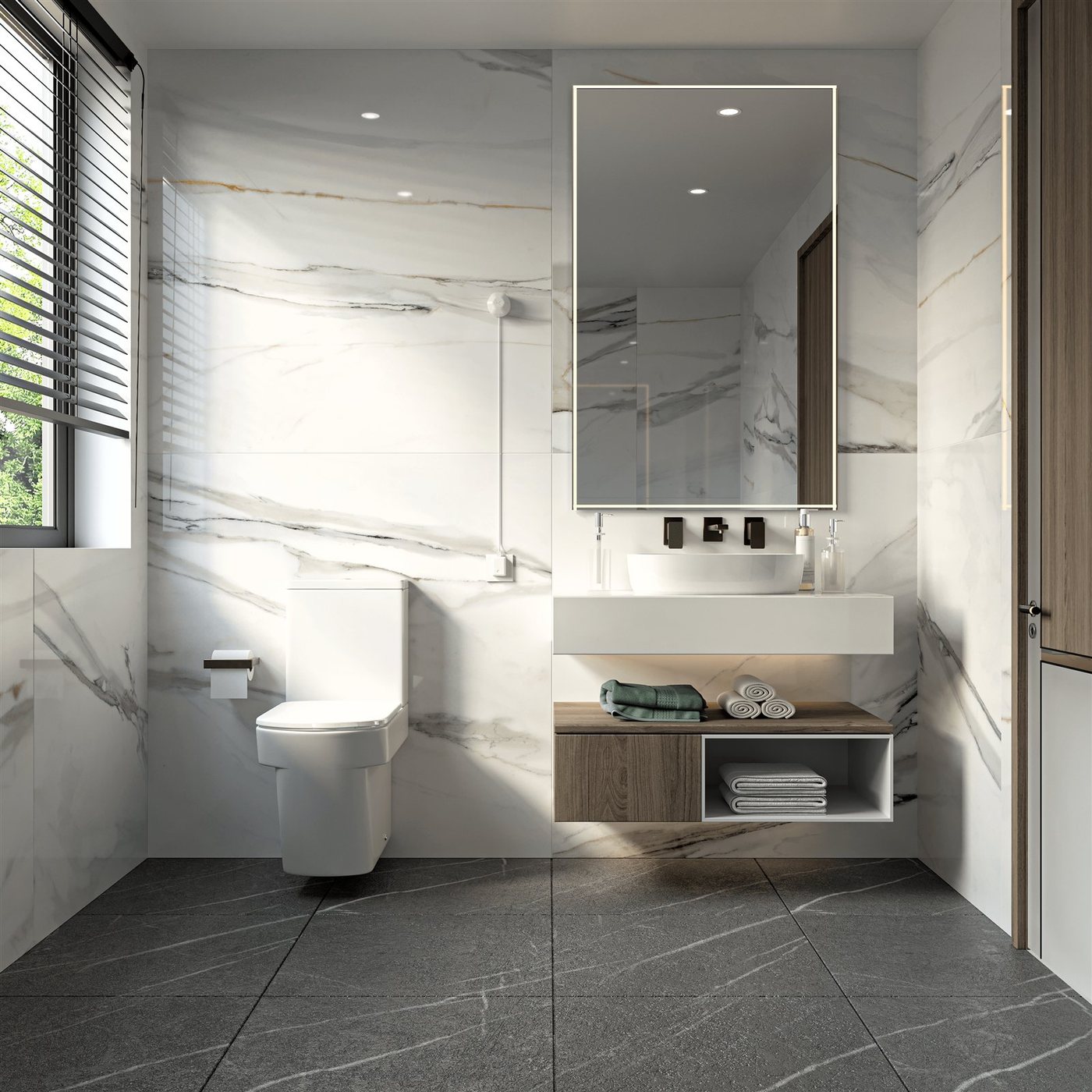
In a washroom nobody is looking, and a person who has stopped moving cannot press a button or call out. SUHO reads occupancy and movement with radar. When someone is present, breathing, and has not moved for longer than the time you set, it notifies the staff you name.
Occupied: a person is in the room
Moving: normal use, no timer
Still, with breathing only: the timer starts
Past the threshold: staff are notified
Someone present and breathing, without movement, beyond the threshold for that room.
A room occupied beyond a set duration, 8 minutes by default, for a check-in knock.
Sound and a visual on the dashboard, SMS and email to the staff you name, and webhooks into your systems.
Entries, total time in use, and occupied or vacant right now, for cleaning rotas and reporting.
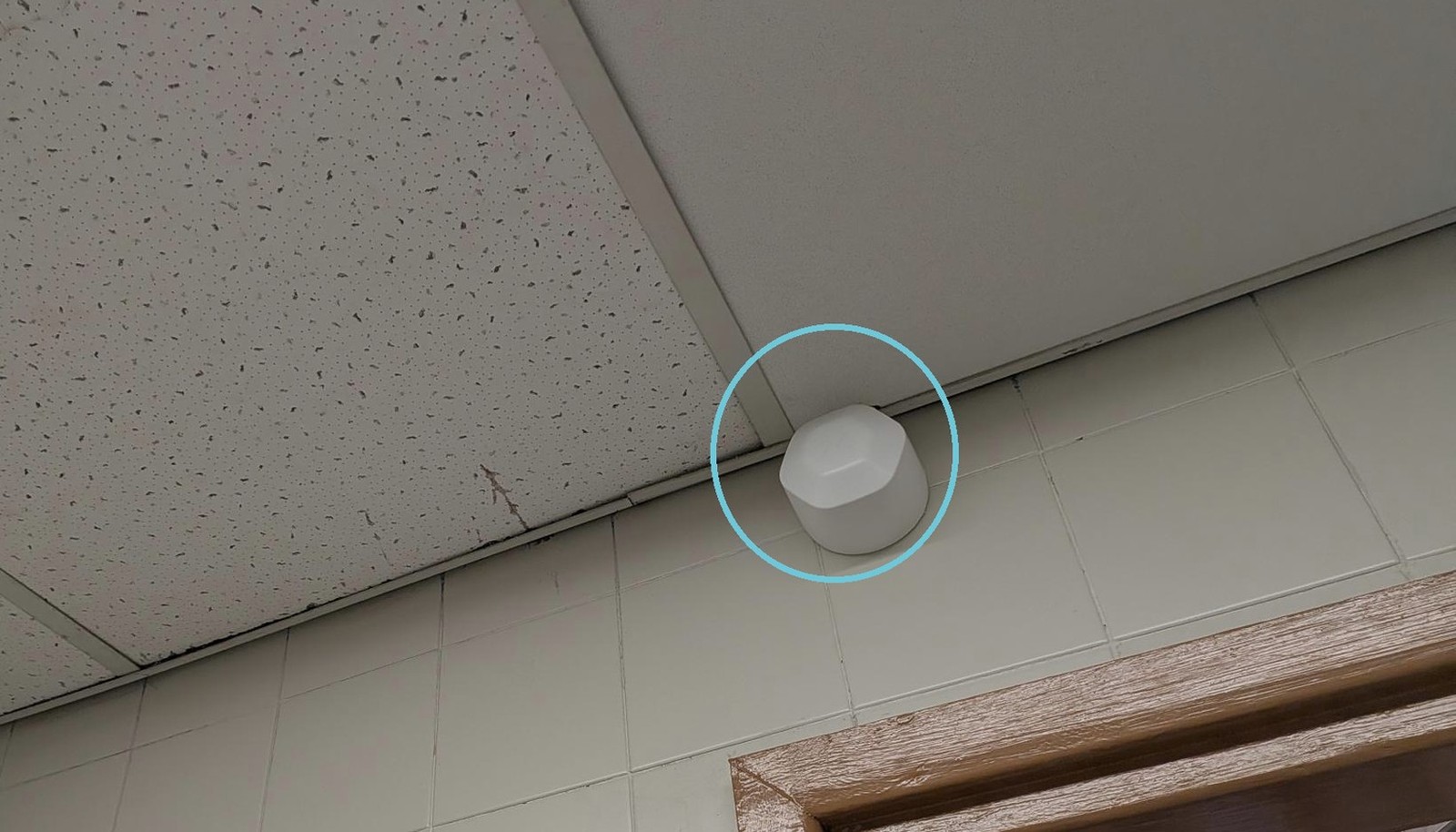
On the ceiling of an emergency-department bathroom.
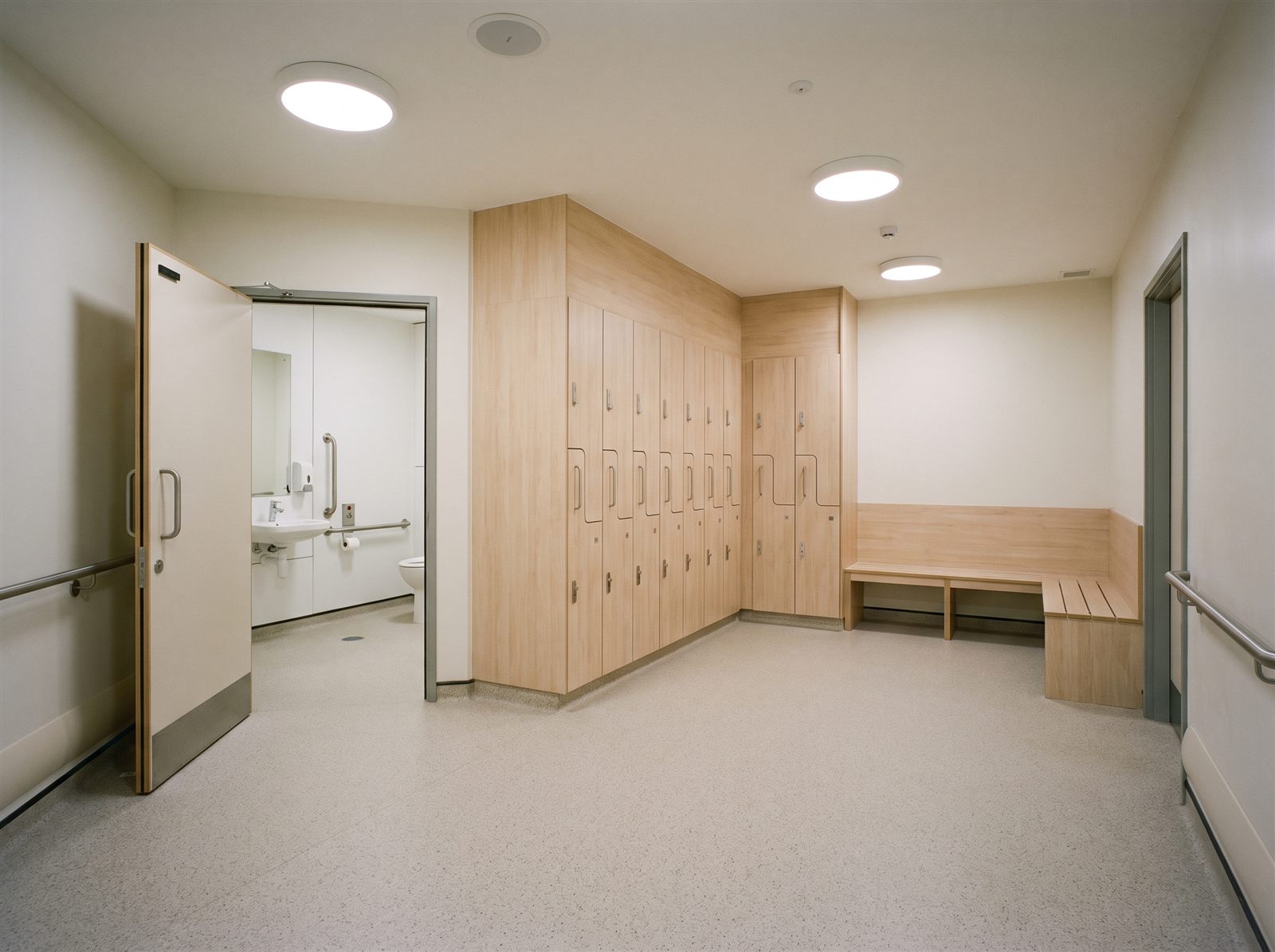
Staff washrooms and locker rooms, where people are alone.
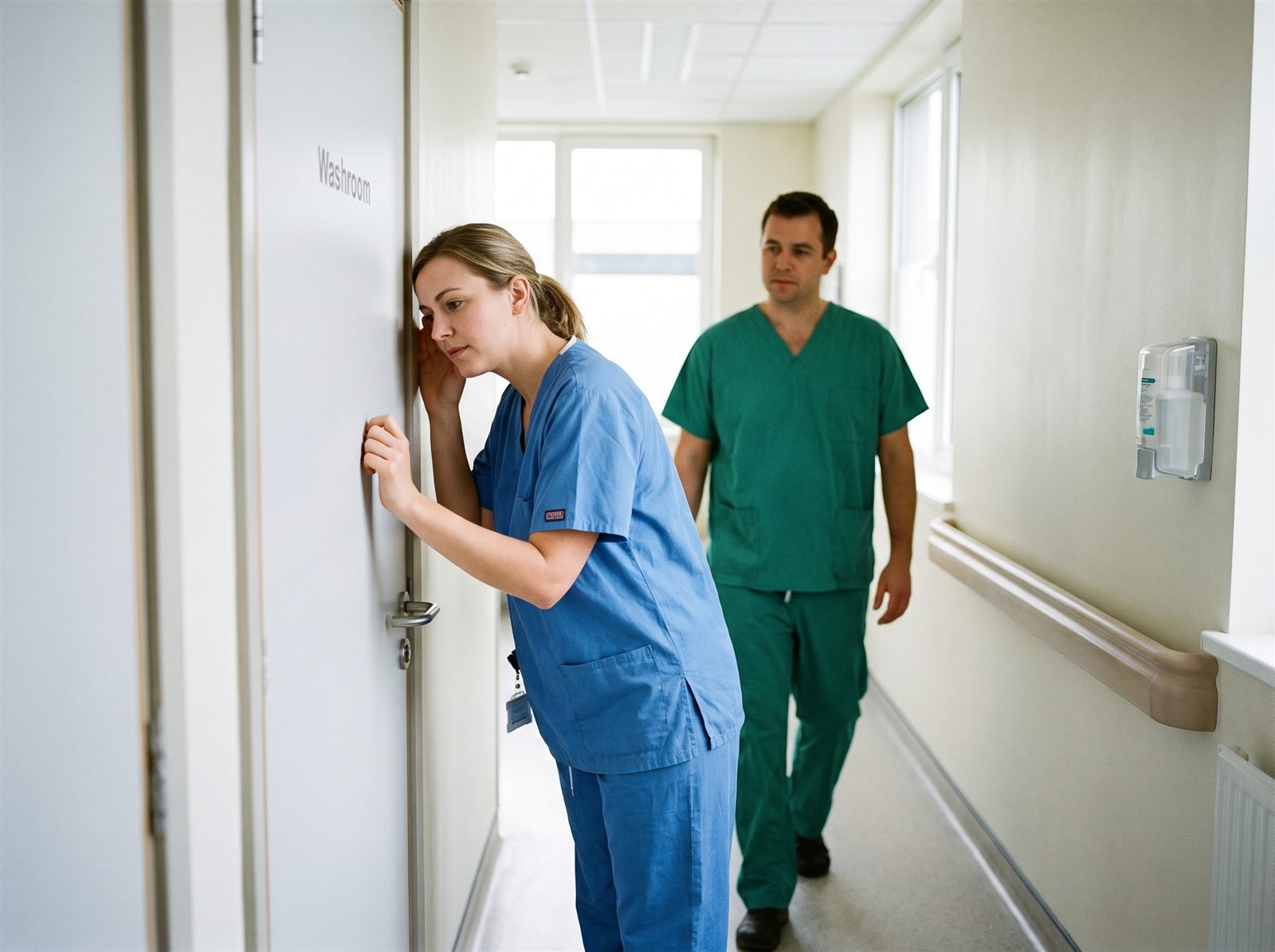
The notification reaches staff. They knock, and go in.
Patient and shared bathrooms, shower rooms without a bathtub, staff washrooms and locker rooms, accessible toilets, and other rooms where a person awake keeps moving.
Bedrooms, rest areas and bathtubs, where lying still is normal. In bedrooms, the XK300 measures heart rate and breathing instead.
SUHO reports two things: whether a person is present in the detection area, and how long they have been without body movement. Both are named in the XK300’s FDA clearance, K202464, which covers presence or absence within seven metres and the length of continuous motion or absence of motion. SUHO shows no vital signs, makes no vital-sign claim and diagnoses nothing. What the threshold is, who is notified and what they do next are set by your own policy, not by the device.